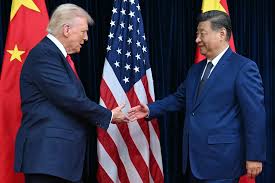
When President Xi Jinping visits the U.S. on March 31st, he is expected to have an improved bargaining position compared to when President Trump visited China in 2017. The U.S. Supreme Court ruling recently regarding the imposition of global emergency tariffs against China by President Trump will help facilitate this improved negotiating position for Xi. In addition, the U.S. Supreme Court’s ruling has invalidated most of the second-term tariffs that President Trump imposed against China, leaving the U.S. with little leverage in negotiations with China for one of its most significant sources of leverage against China’s recent trade actions.
At present, China is currently under a 15% worldwide tariff due to being subject to the same rules as all other allied nations of the United States; that tariff will remain in effect however the length of that time frame is 150 days as outlined in Section 766(b)(1)(A) of HR 1539 enacted by Congress on 10th October 2019. In addition to facing that 15% global tariff, prior to being affirmed in the court ruling above, there were additional tariffs against China ranging up to 145%. Thus, being able to rely on lessened tariffs will result in the loss of leverage Trump had while negotiating to expand the amount of US products bought by China (i.e., soybeans, Boeing Aircrafts, Natural Gas, etc.). Further more, because of reduced leverage using Tariffs, the US will be limited from gaining access (in the future) to strategic elements such as Rare Earth Elements that are necessary to produce goods in the US.
Wu Xinbo, Director of Fudan University’s Center for American Studies, expressed that the current ruling puts China in a better position to negotiate with the U.S., especially given that China’s earlier agreement to buy about 25 million tons of soybeans from the U.S. was dependent upon tariff negotiations. If tariffs on these products were to be found to be illegal or in violation of the law, he continued, that leverage would be returned back to Beijing.
China is expected to use the negotiation time to push for the reduction of semiconductor tariffs on their exports to the U.S., the elimination of trade restrictions on Chinese companies and the lessened level of U.S. support for Taiwan. Although there are significant strategic consequences to these negotiations, Beijing’s response has been relatively calm and measured.
While President Trump still has legal authority to levy tariffs on imports under section 301, 232, and 122 of The Trade Act after he has completed the official investigations, the time required to carry out these inquiry processes constrains him from putting immediate pressure on China prior to the summits.