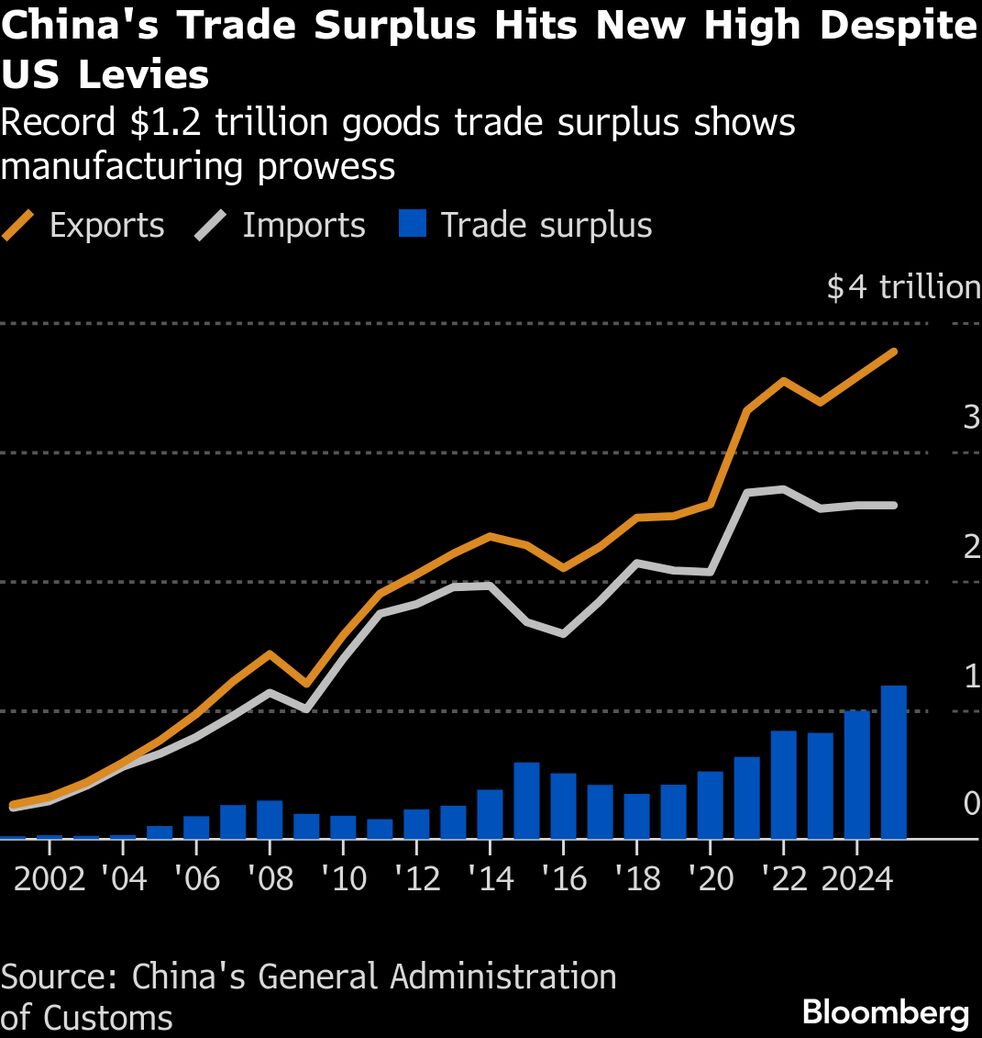
Ending 2022 with a strong finish, China’s exports reached a record trade surplus of $1.2 trillion in 2025. In the past, factories were able to avoid Donald Trump’s tariffs by increasing their presence in other foreign markets and reducing their reliance on the United States.
In a somewhat surprising manner, China continues to grow due to its export growth in December which was contrary to previous expectations of a slowed economy in the near future. The 6.6% growth in December was the highest monthly growth since September and exceeded forecasts in a Bloomberg survey of economists.
“We anticipate continued export strength going forward, with exports serving as an engine of growth and offsetting the negative effects of lower consumption in the domestic economy,” said several Barclays economists, including Ying Zhang.
The increase in total ship-to all shipments to Southeast Asia and Europe outpaced the decline in total shipments to the US during the same period last year.
China has made significant strides in climbing the ladder of value-added products as evidenced by the increase in these exports over time from China, resulting in the reduction of imports for items such as automobiles. Additionally, with the migration of supply chains being established in foreign countries due to many multinational corporations being supported by Chinese investments, the demand for Chinese parts, components, and equipment has increased dramatically. The overwhelming demand created by this influx of new factories will continue to push demand for all of the related raw materials associated with them.
The many reasons that are fueling China’s explosive growth in trade and trade surpluses will not disappear anytime soon.China’s current account balance is the International Monetary Fund’s estimate of total exports and imports of goods and services as measured using this metric (inclusive of services), and its percentage of GDP is expected to exceed 3% for 2010. This projection represents an increase over 2010 when the total volume of exports and imports associated with China was estimated at upwards of three percent, making this the largest amount of surplus China has ever shown since 2010 when China began exporting substantially more since joining the World Trade Organisation around that same time period.
This ever-increasing trade surplus highlights the disparity that continues to exist in China between its exceptional manufacturing prowess and a lack of growth within China’s own domestic marketplace. The continued imbalance in demand versus production is considered a weakness for China and is not expected to change anytime soon.
China’s position as the world’s second largest economy has been built on strong export growth. However, due to declining property values and investment, coupled with increased domestic deflation, the country has become less conducive towards importing goods from outside of China, including crude oil. As such, the depressive effect will cause more depreciation of the Chinese Yuan based on inflation relative to domestic inflation, which should encourage export of Chinese-produced products.