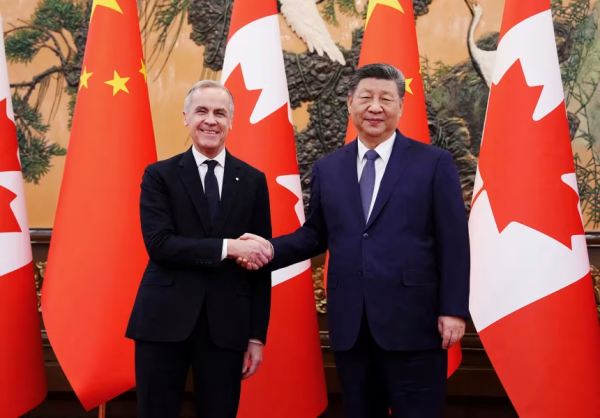
Canadian Prime Minister Mark Carney hailed a new “strategic partnership” with China during a meeting with leader Xi Jinping Friday, as the US ally took steps to reset ties with Beijing in the face of historic friction with Donald Trump.
Canada would ease tariffs on Chinese electric vehicles and expected China to significantly reduce barriers tariffs on Canadian canola seed later this year, Ottawa said in a statement after the meeting – in a major step to ease long-standing trade tensions.
Carney is the first Canadian prime minister to visit since 2017, a year before relations between the two cratered after Canada arrested an executive from Chinese telecoms giant Huawei at the request of the US, and Beijing imprisoned two Canadian citizens shortly after.
The prime minister’s visit this week had made clear Ottawa’s new objective: to move its economy closer to its second largest trading partner following a year in which Trump ratcheted up trade and political frictions with Canada, imposing sweeping tariffs and publicly musing about turning the country into the 51st US state.
Speaking to Xi in Beijing’s ornate Great Hall of the People on Friday morning, Carney described the countries’ “new strategic partnership” as one that could work to improve a strained international system.
“Together we can build on the best of what this relationship has been in the past to create a new one adapted to new global realities,” Carney said in his remarks, noting that the two sides would focus on areas where they can make “historic gains” such as agriculture and energy.
The deepening partnership would “help improve” the multilateral system, which “in recent years had come under great strain,” he added.
The language marks a sharp departure from rhetoric of recent years when Canada and its G7 partners raised concerns about Beijing’s activities on the global stage and interference in their democracies.
A China reset
As ties with the US have soured, Carney, who was elected in April, has looked to boost ties with other partners, including Europe, India and now China.
Trump slapped tariffs on Canadian goods (while exempting many under a pre-existing trade agreement) last year and has frequently called for Canada to become the “51st state” – sparking concern and disbelief among Canadians.
While that rhetoric has cooled, Ottawa is paying close attention to Trump’s escalating talk of taking control of Greenland, the Danish territory off Canada’s eastern coast.
That push for a China reset comes despite a difficult relationship between the two sides in recent years.
During a debate ahead of his election in April, Carney replied “China,” when asked to name Canada’s biggest security threat.